The 3D Printing Revolution and Safety Concerns
From unique toys in children’s rooms to life-saving medical parts, 3D printing technology has penetrated every corner of modern life. In Vietnam, the number of home 3D printers has increased by 300% in just the past 2 years, especially popular in STEM education and technology startups.
However, along with this rapid development, a question that is increasingly of interest to many people is: “Is 3D printing safe?” . This is not an unfounded concern when we witness unfortunate accidents from improper use of 3D printers.
This article will answer your questions comprehensively, from analyzing potential risks to effective prevention measures. Because, understanding the risks is the first step to safely enjoying the great benefits that 3D printing technology brings.
1. Is 3D Printing Safe? The Answer Is Not So Simple
Reality Is More Complicated Than You Think
The question “is 3D printing safe?” is like asking “is it safe to drive?”. The answer depends on a lot of factors:
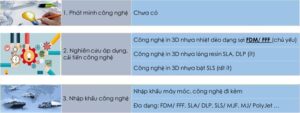
What type of 3D printing technology do you use :
- FDM (Fused Deposition Modeling) : Relatively safest, uses molten plastic
- SLA/DLP (Stereolithography) : Using liquid resin, need to be more careful
- SLS (Selective Laser Sintering) : Uses metal or polymer powder, requiring strict protection measures
Your choice of printing material :
- PLA : Safest, environmentally friendly
- ABS : Generates exhaust gas when hot, requires ventilation
- PETG : Balance between safety and durability
- Resin : Toxic when not cured, handle with care.
Usage environment : A completely sealed room is different from a well-ventilated space with an air filtration system.
Remarkable Statistics
According to a study by the University of Illinois (2021), 78% of 3D printing safety issues come from improper use, not from the technology itself. This shows that 3D printing can be completely safe if we know how to use it properly.
2. Hidden Risks: Dangers From Seemingly Harmless Things
1. Smoke and Emissions: The Silent Enemy
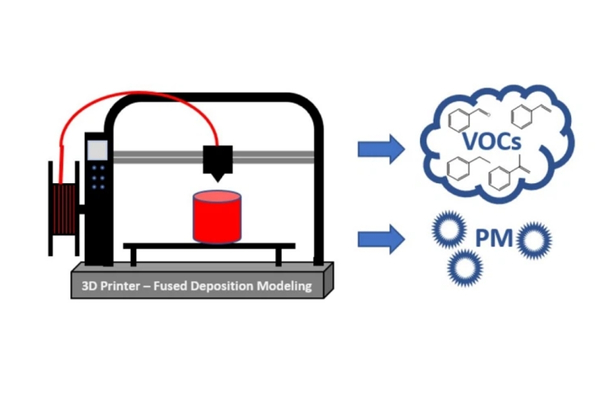
The real issue : When many people ask “is 3D printing safe ,” they are often most concerned about the fumes and emissions from the printing process.
Common toxic gases :
- VOCs (Volatile Organic Compounds) : From ABS, nylon causes respiratory irritation
- Ultrafine particles : Ultrafine particles can penetrate deep into the lungs.
- Styrene : From ABS, can cause headaches, fatigue
Real story : Anh Minh, a STEM teacher in Hanoi, recounted: “After 6 months of 3D printing with ABS in a closed room, I started to have a dry cough and felt short of breath. Only when I switched to PLA and improved ventilation did the situation improve.”
2. Exposure to Toxic Materials: Skin Hazards
Resin – “Double-sided” material : Uncured resins contain compounds that can:
- Causes severe skin allergies
- Irritation to eyes and mucous membranes
- Toxic if swallowed or inhaled.
Case in point : Ms. Lan, a jewelry designer, developed severe contact dermatitis after working with resin without wearing protective gloves. “My hands were red and sore, with blisters for weeks,” she says.
3. Fire and Explosion Risk: Danger From Poor Quality Equipment
Common causes :
- Hotend overheating due to broken sensor
- Poor quality circuit
- Electrical cords wear out over time
- Leave the machine running continuously for many hours without supervision.
Alarming statistics : According to a report by the Vietnam Fire Prevention and Fighting Department, there will be about 15 fires related to 3D printers recorded in 2024.
4. Incorrectly Designed Printed Products: Risks From The Results
In the medical field :
- Incorrectly fitted prostheses can cause injury
- Medical instruments printed in wrong size are dangerous for patients
In industry :
- Mechanical parts that do not meet durability standards can cause work accidents.
- Incorrectly printed electronic components can cause electrical short circuits.
5. Kids and 3D Printers: When Curiosity Meets Danger
Special risks for young children :
- Burns from touching hot end (200-300°C)
- Hand caught in moving parts
- Ingestion of small pieces of plastic
- Long-term inhalation of exhaust fumes
3. Prevention: Making 3D Printing a Safe Activity
1. Choose a Quality Printer: Invest in Safety
Safety features required :
- Thermal runaway protection : Automatic shut-off when overheating
- Power recovery : Continue printing after power failure
- Quality components : High quality components from reputable manufacturers
Trusted Brand :
- Prusa : Renowned for safety and reliability
- Ultimaker : Industrial standard, high safety
- Bambu Lab : New technology, integrating many safety features
2. Optimize the Working Environment: To Breathe Is To Live
Effective ventilation solutions :
- Enclosure with filtration system : Reduces 95% of emissions into the environment
- Window mounted exhaust fan : Simple but effective
- HEPA Air Purifier : Removes Ultra-Fine Particles
Set up the ideal space :
- Place the machine at least 3 meters away from the rest area.
- Make sure there is always a window or door open.
- Avoid placing in bedroom or kitchen
3. Protective Equipment: Weapons Against Risk
When working with resin :
- Nitrile gloves : Chemical resistant
- Safety glasses : Avoid eye contact
- N95 Mask : Filters toxic vapors
- Long sleeve jacket : Skin protection
In the family environment :
- Always have a basic first aid kit
- Prepare emergency eyewash when using resin
- Disposable gloves available
4. Material Management: Safety From Storage
With resin :
- Store in a dark, stable temperature cabinet.
- Keep out of reach of children
- Use a funnel and straw when pouring.
- Waste disposal according to environmental regulations
With filament :
- Store in a sealed container with a desiccant bag.
- Periodically check the filament for breakage.
- Choose the filament type suitable for the space used
5. Monitoring and Maintenance: Prevention is Better than Cure
Periodic inspection schedule :
- Weekly : Check electrical wires, clean machine
- Monthly : Machine calibration, hotend testing
- Quarterly : Replace worn components, update firmware
Warning signs to stop immediately :
- Unusual burning or smoke smell
- Strange noises from motor or fan
- Unstable temperature
- Print quality suddenly drops
4. Subjects That Need Special Caution
Children and Students: Safety Must Come First
When introducing 3D printers to schools, many teachers ask the question “is 3D printing safe” for students. The answer is yes, but it is necessary to:
Special protection measures :
- Teacher supervision always available
- Use only PLA or PETG
- Install protective enclosure
- Thorough safety education
Beginners: Knowledge Is Power
Safe learning path :
- Week 1-2 : Learn theory, watch video tutorials
- Week 3-4 : Practice under supervision of experienced person
- February : Do simple projects yourself
- Month 3+ : Explore advanced materials and techniques
Resin Users: Be Doubly Careful
Strict security protocol :
- Never work alone
- Always have someone know where you are when printing
- Prepare a contingency plan
- Contact the nearest hospital immediately.
5. Conclusion: Safe 3D Printing – A Smart Choice
The Final Answer
So “is 3D printing safe” ? The answer is YES – if you:
- Understand the potential risks
- Equip yourself with the right knowledge and equipment
- Strictly follow safety rules
- Stay up to date with the latest technology
Bright Future
3D printing technology is getting safer with new improvements:
- Bio-Filament : Completely harmless
- Automatic Printer : Minimize manual intervention
- AI monitoring : Early detection of abnormalities
- Cloud printing : Remote monitoring
Don’t let safety concerns stop you from exploring the wonderful world of 3D printing. Instead, arm yourself with the right knowledge, equipment, and attitude. Because, when used responsibly, 3D printing is not only safe, but also opens up endless opportunities for creativity and growth.